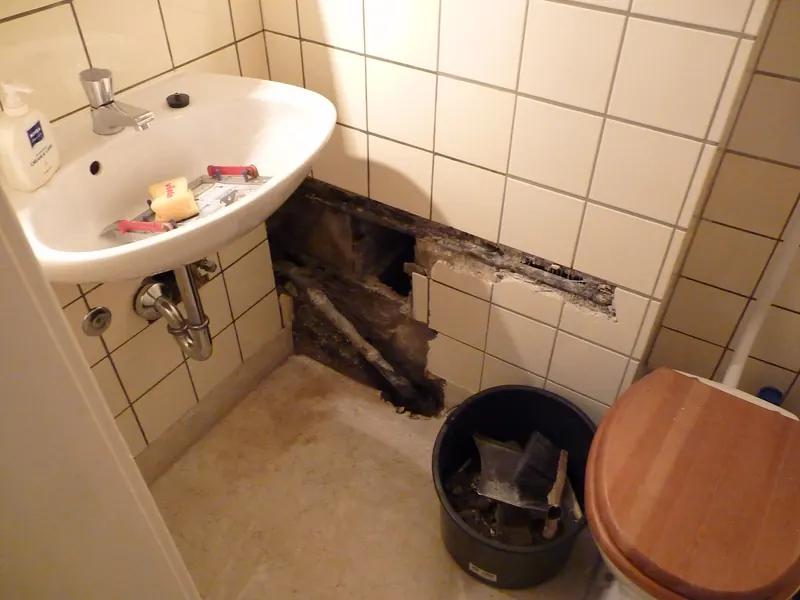
Mold After a Plumbing Leak or Burst Pipe
Plumbing leak mold is removed from wall, floor and cabinet materials left wet by a burst pipe or by a slow drip.
See mold after a plumbing leak or burst pipeGet a plan for mold under sink plumbing, behind cabinets or near an appliance in Bellflower. Cover the leak, containment, drying and repairs.

Cleanup includes locating the water source, isolating the space, taking out damaged material, cleaning surfaces and drying the area.
Kitchen drywall, flooring and the bottom of a cabinet can become affected when sink plumbing, a dishwasher, a faucet or a refrigerator supply line leaks.
A written scope should identify affected materials, containment, tear out, cleaning, drying, leak repair and final moisture readings.
Check how the plan covers cleaning, repairs, HEPA filtration, drying, removal boundaries and unexpected growth.
Your clearance testing should come from an assessor independent of the company that removed the mold.
Confirm how the project will examine plumbing, appliances and surrounding materials for remaining moisture.
Ask how barriers, negative air and clean food areas will be managed.
A visible surface patch is not the same as mold inside a wet wall cavity or particle board. Check these common situations:
Kitchen drywall may become soaked by a slow plumbing leak. You may see stains or peeling paint beyond where the water began.
Growth inside wet cabinet materials differs from residue found on the surface. Recurring odor calls for a plumbing and moisture check.
A cabinet base may be wet when its particle board swells or its laminate peels. You may need to remove porous materials.
The term black mold under kitchen sink refers to color, not confirmed danger. According to CDC guidance, color cannot indicate risk.
When safe, stop new water first and leave the growth undisturbed.
Call (844) 352-3560Kitchen mold removal costs $1,200 to $10,000 in the range listed by Fixr. Factors include location, material replacement and leak repair. Do not treat the range as a quote.
These ranges come from published national cost guides, not from a site visit. Before work begins, you should get an explanation of the property price determined through an on-site assessment.
Ask about cost: (844) 352-3560Coverage varies with the cause and policy terms. Mold from sudden water damage covered by the policy may qualify. Long-term dampness is commonly excluded.
A slow leak or recurring condensation may receive different treatment from abrupt appliance failure. Consult your policy.
Under California's housing law, visible mold found by a health officer or code enforcement officer can make a rental substandard. Renters can contact their local health or code enforcement department to ask for an inspection. Save dated messages and photos showing the growth, water leak and access for repairs.
Notify promptly. Discuss required records, the covered cause, any mold sublimit and movement of damaged cabinets.
California's Toxic Mold Protection Act includes a landlord written-disclosure section (Health and Safety Code 26147). By its own wording it applies only after the state adopts mold exposure standards, and the state health department has said it could not set them. Save your leak repair record and scope along with pictures, moisture readings and independent clearance findings.
Affected materials and the size of the area shape the exact process.
Inspect the cabinets, plumbing, appliance lines, floor, ceiling and walls. Moisture readings define the area.
Dust remains enclosed by poly sheeting as the air filtration device maintains negative air pressure.
Workers bag or wrap damp drywall, particle board and additional porous materials.
Sound framing and non-porous surfaces are cleaned. Antimicrobial treatment is not a substitute for cleaning.
A dehumidifier and air movers may help. Moisture readings guide repair after remediation.
Final cleaning includes a visual check. Use an independent assessor to conduct air sampling or clearance testing.

Phone at any hour. Your call reaches a kitchen mold removal specialist who hears your concerns and explains the process ahead.
Hidden cavities, absorbent materials, contaminated water and HVAC involvement make the cleanup more difficult.
A moisture meter finds damp material. Thermal imaging guides inspection but does not identify mold.
A containment barrier, poly sheeting, negative air pressure and a HEPA air scrubber control particles.
When contaminated water is present, EPA guidance recommends experienced assistance. Match your protective equipment and disposal approach to the source.
Can you clean it yourself? The EPA says homeowners can often clean affected areas under about 10 square feet. Larger mold areas need professional help, as do projects involving HVAC systems or contaminated water. Fix the water problem first.
Some washable hard surfaces can stay. Porous material with mold may need to be taken out.

California has no state license or certification for mold assessors or remediators, according to the California Department of Public Health. General construction work above a small dollar amount does need a license from the Contractors State License Board (CSLB), so it is worth checking a contractor's license there and asking about their mold training. Confirm applicable permit requirements for plumbing, rebuilding or electrical work.
Dry water-damaged areas and items within 24 to 48 hours to prevent mold growth. Address your water problem before cleanup.
Indoor mold has no limit under federal law. Consider affected materials, what you can see, moisture readings and why testing is being considered.
The California Department of Public Health (CDPH) Air Quality Section publishes mold and dampness guidance and a mold FAQ. CDPH says visible mold, dampness, and mold odor are unhealthy and should be fixed, and that routine mold testing is not needed when mold is visible. Ask about rules for your property type and planned work.
A firm schedule comes after inspection. The time required changes based on water spread, removal needs, leak correction and drying.
The full kitchen mold removal guide covers what is cleaned or removed, odor and air quality work, and the rules that apply in your state.
Read the full kitchen mold removal guideLocal housing, humidity and property access can shape moisture control, containment and mold cleanup planning.
In Bellflower, the 61 percent renter share means a dated written report can identify a leak or visible mold and help the owner plan access for inspection and removal.
The median home in this community was built in 1966, so plumbing joints, roof penetrations, insulation, and lower level moisture should be checked when mold appears.
The housing mix is 56 percent single-family, making building type important when deciding whether to inspect separate exterior systems or connected ceilings and walls.
At 22 percent living alone among seniors, a musty smell or new wall stain should prompt a search for the water source before surface cleaning.
You can ask about mold cleanup in nearby communities and ZIP codes during the call.
Plumbing leak mold is removed from wall, floor and cabinet materials left wet by a burst pipe or by a slow drip.
See mold after a plumbing leak or burst pipe
Growth concealed above ceilings, below floors or inside walls is found and removed during hidden mold remediation.
See hidden mold remediation (behind walls)
Wall and drywall mold removal opens the affected surface, removes damaged drywall and cleans framing within the wall before replacement.
See wall and drywall mold removal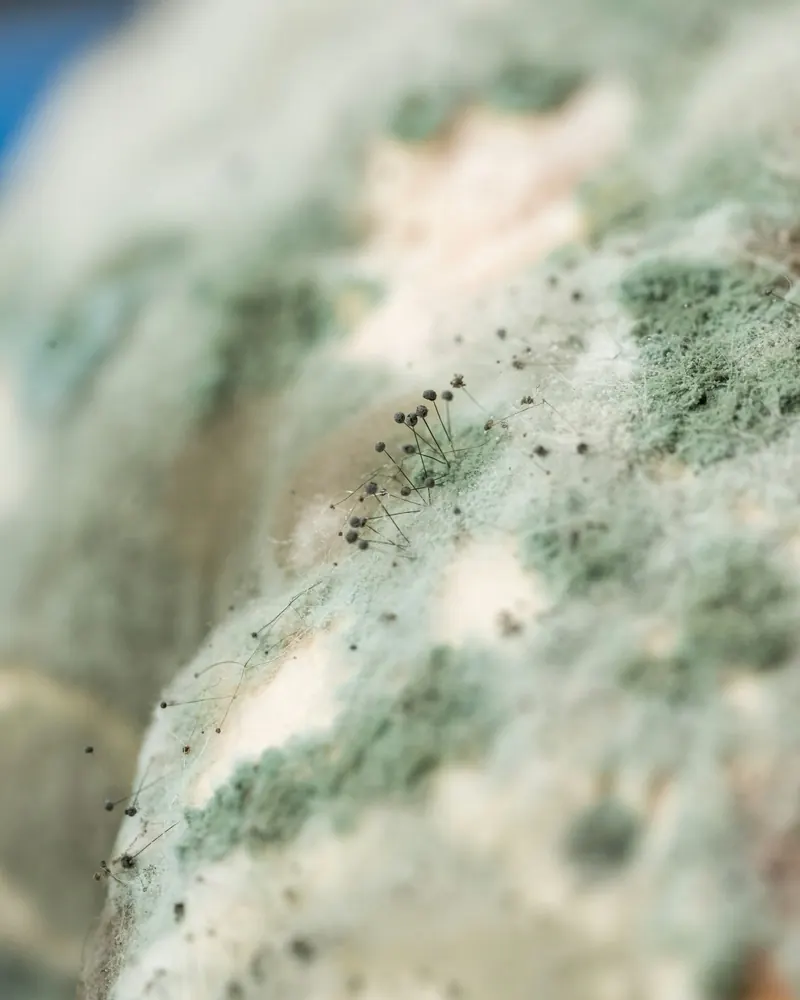
Moldy carpet, flooring and subfloor are cleaned or replaced during subfloor mold removal, and the below-floor moisture source is fixed.
See floor and subfloor mold removal
Water damage mold cleanup includes clearing growth caused by a flood or leak and drying the affected structure against a return.
See water damage mold cleanup
A mold inspection is combined with removal so workers can locate the growth before cleaning it away.
See mold inspection and removal
Mold damage restoration clears the growth before damaged insulation, flooring, drywall and other building materials are repaired or replaced.
See mold damage restoration
Mold clearance testing is a check after removal, with air samples and a visual check, to confirm the area is clean.
See mold clearance testingWhen growth covers more than about 10 square feet, or contaminated water, extensive water damage or affected HVAC equipment is present, EPA guidance recommends professional help. Professional help also makes sense below flooring or within walls when the needed containment goes beyond a small cleanup.
Look for growth, stains, swollen particle board, peeling finishes, damp items and musty odor. Check supply and drain connections without scraping. Damp materials can be mapped with a moisture meter. Thermal imaging can guide your check without independently identifying mold.
Insurance coverage varies with policy terms and the water source. Mold after a covered sudden event may qualify, while long-term leaks, neglected maintenance and recurring humidity are commonly excluded. Before removal, document the damage, confirm policy requirements and ask whether a mold sublimit applies.
The published Fixr range runs from $1,200 to $10,000. Cost factors include growth near sinks or behind cabinets and appliances, material replacement for floors, drywall or cabinetry, and leak source repair. Your final project scope depends partly on access and the square footage affected.
Mold needs moisture. Common sources include a plumbing leak, loose faucet connection, dishwasher leak, refrigerator water line, condensation and high humidity. Mold may appear only after water has traveled under your floor or cabinet base. Your initial action is to identify and correct where the water began.
Material type and extent determine the answer. Tile, metal and other non-porous surfaces may be cleaned and dried. Growth can enter particle board, drywall and other porous materials. For affected sections, leak repair and drying may follow controlled removal.
Calls about kitchen mold removal are answered 24 hours a day, so you can receive clear and practical guidance.